
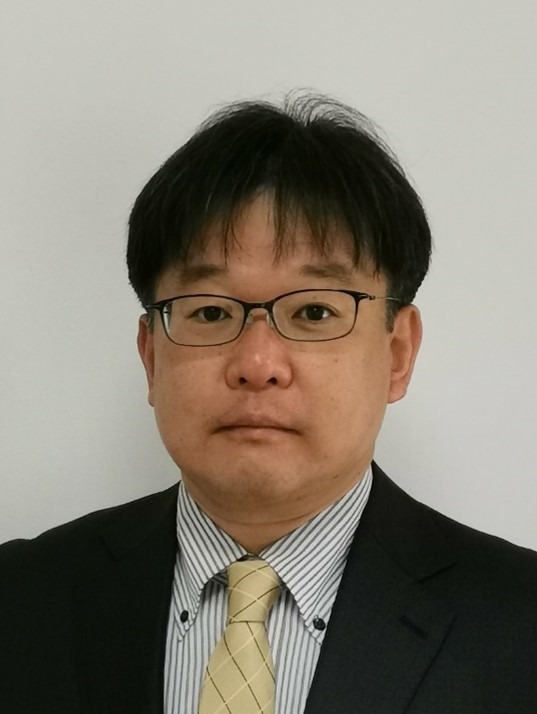
Masafumi Fujita, PhD
Professor, Department of Urban and Civil Engineering, Ibaraki UniversityHis teaching is primarily in water and wastewater engineering, while his research focuses on water environment and water treatment engineering.
▶ Fujita Laboratory website [IU Researcher Directory] [researchmap] [ORCID] [ResearchGate]
Career
- 1996BEng, Urban and Civil Engineering, Ibaraki University
- 1998MEng, Urban and Civil Engineering, Ibaraki University
- 2001PhD, Urban Engineering, University of Tokyo
- 2001–2003Postdoctoral Researcher, Toyohashi University of Technology
- 2003–2008Assistant Professor, University of Yamanashi
- 2008–2010Lecturer, Ibaraki University
- 2010–2022Associate Professor, Ibaraki University
- 2012–2013Visiting Researcher, University of Auckland
- 2022–presentProfessor, Ibaraki University
Research Interests
Research on sustainable management and conservation of water environments1. Development of real-time integrated modeling approaches for WWT processes using online sensor data
- Modeling of biological phosphorus removal processes using hybrid ODE (Activated Sludge Models × machine learning) DOI: 10.1016/j.biortech.2024.131217
- Enhancement of reproducibility and interpretability in hybrid ODE and development of evaluation metrics DOI: 10.1016/j.jenvman.2025.124932
2. Development of environmental stress assessment methods for aquatic organisms using antioxidant biomarkers
- Relationship between antioxidant responses and growth potential of brackish bivalves exposed to natural and anthropogenic stressors DOI: 10.1016/j.envpol.2022.119676
- Mechanisms of antioxidant responses in brackish bivalves exposed to microplastics DOI: 10.1016/j.scitotenv.2024.175089
3. Development of water environment management technologies for creating multiple values using brackish bivalves (starting in FY2026)
4. Investigation of antioxidant response mechanisms in activated sludge microbial communities
- Application and evaluation of antioxidant biomarkers in activated sludge DOI: 10.2965/jwet.23-066
5. Development of predictive modeling approaches for saltwater intrusion using machine learning
- Enhancement of interpretability in saltwater intrusion prediction using decision tree–based models DOI: 10.1016/j.rineng.2024.102373
Past Research
- ▽ Assessment of urbanization impacts on coastal ecosystems in Pacific atolls and development of climate change adaptation strategies (Ibaraki University) DOI: 10.1007/s11625-013-0204-x DOI: 10.1016/j.chemosphere.2013.10.023
- ▽ Development of diagnostic technologies for internal deterioration in water distribution networks (IU) DOI: 10.1007/s11269-014-0571-9 DOI: 10.2166/ws.2016.026
- ▽ Development of energy-generating wastewater treatment technologies using microbial fuel cells (IU) DOI: 10.1007/s12010-019-02994-3 DOI: 10.1007/s00449-022-02792-y
- ▽ Investigation of nutrient cycling mechanisms and development of integrated ecosystem models in brackish environments (IU) DOI: 10.2208/kaigan.65.1231 DOI: 10.2208/kaigan.66.1141
- ▽ Mathematical modeling of instability mechanisms in biological nutrient removal processes (University of Yamanashi and IU) DOI: 10.2166/wst.2010.978 DOI: 10.2965/jswe.31.755
- ▽ Environmental dynamics analysis using quinone biomarkers (forest hydrological processes and landfill stabilization assessment) (UY) DOI: 10.2166/wst.2006.042 DOI: 10.3985/jswme.19.347
- ▽ Assessment of sediment environments and biological functions in inner bays and tidal flats (Toyohashi University of Technology and UY) DOI: 10.2112/05-0486.1 DOI: 10.1016/j.ecoleng.2004.05.003
- ▽ Development of treatment and resource recovery technologies for wastewater and waste using high-temperature and high-pressure water (TUT) DOI: 10.11532/proes1992.40.23 DOI: 10.1016/j.jhazmat.2003.12.010
Doctoral Dissertation
Microbial community structure analysis of anaerobic–aerobic sequencing batch activated sludge and model-based evaluation of the transition process of biological phosphorus removal activity (University of Tokyo, September 2001)