
Saltwater Intrusion Monitoring and Prediction in the downstream reach of the Kuji River
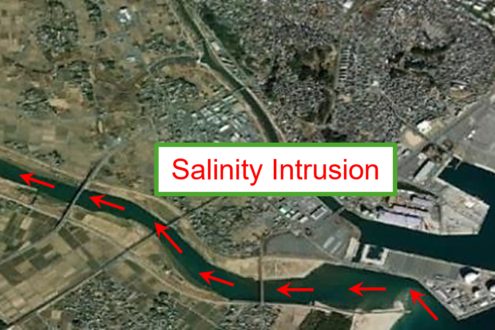
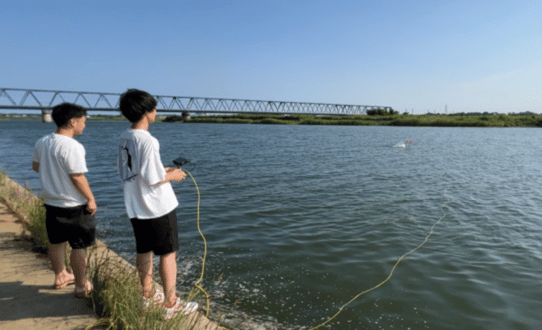
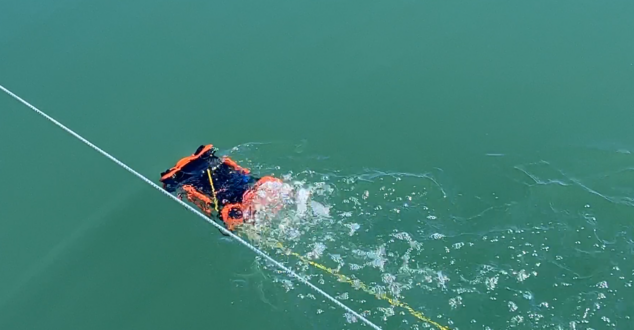
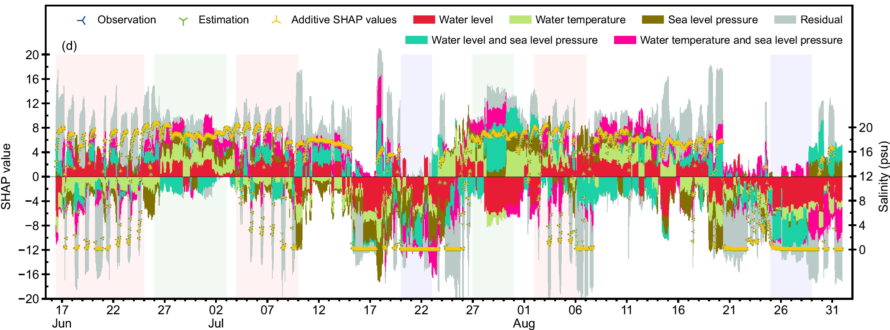
Rivers are essential sources of drinking water; however, in recent years, saltwater intrusion in downstream river reaches has become an increasing concern, likely due to climate change. From the perspective of water intake and treatment management, the ability to predict saltwater intrusion in advance is highly important. In this study, we investigate saltwater intrusion in the downstream reach of the Kuji River, an important water source in northern Ibaraki Prefecture, Japan. Because riverbed topography strongly influences saltwater intrusion, we also evaluate riverbed morphology using underwater drones. Our previous studies have demonstrated that saltwater intrusion can be accurately predicted using machine learning based on hydrological and meteorological data, including river water level, water temperature, and tidal level.
Recent Publications:
- Sato, S., Fujita, M. (2025) Estimation of saltwater intrusion in the downstream of urban river using long short-term memory, Japanese Journal of JSCE, 81 (25), 25-25053. doi: 10.2208/jscejj.25-25053.
- Zhao G, Ohsu K, Saputra HK, Okada T, Suzuki J, Kuwahara Y, Fujita M (2024) Enhancing interpretability of tree-based models for downstream salinity prediction: Decomposing feature importance using the Shapley additive explanation approach, Results in Engineering 23, 102373. doi: 10.1016/j.rineng.2024.102373.